
Phase Zero: Building the Foundation for Digital HR Transformation
Getting to Zero
Several years ago in my role as Senior Manager with a Tier One consulting firm, I led the pursuit of a human resources software implementation project. Landing this deal would have represented the beginning of what was to be a multi-year, multi-million-dollar program. The prospect was at the beginning of their “transformation to the cloud” on a new software-as-a-service human capital management platform. Importantly, this opportunity was significant as there were few deals in my sales funnel of this magnitude. I needed to make a good impression for many reasons and I was still in the early stages in my time with this firm.
Everything went according to plan. The sales presentation with the prospect went exceptionally well. We were able to establish our credibility and reputation, and our pitch was well-received by the selection committee. Within a couple of days, I was contacted by the prospect’s procurement lead to congratulate us on winning the bid. Understandably I was ecstatic and, at the same time, incredibly relieved. So much pressure had released as I savored this great news. Then something went horribly wrong.
After the call from procurement, an uncomfortable silence ensued. And then I started to become anxious. Leadership was pressuring me for a project kick-off date. The call finally came. The client had decided to go forward with another firm. To say I was stunned by the news is an understatement. How could this have happened? I later learned that, in the two days following our firm’s sales presentation, the sponsor had been sold on an entirely different implementation approach than the one they had asked for in the procurement process. Phase Zero. Instead of implementing the first module in a series of many implementations to follow, the prospect was convinced to pursue a Phase Zero approach – to essentially conduct a program planning phase to launch the multi-year transformation journey. This would be followed by three or four implementation phases.
I learned the hard way that there are many times when the client is not always right. As it turns out Phase Zero is ALWAYS the right way to begin a transformation journey.
- Kevin Copithorne, Director/Principal Consultant
Phase Zero
“Business leaders will be digitally transforming their companies for the rest of their careers” (McKinsey, 2023)
Digital transformation is no longer a one-time implementation effort. It is the ongoing work of embedding technology into products, services, operations, and business models to improve experience, lower cost, and sustain advantage. In HR, that means building digital products and services that improve the employee experience and increase organizational agility. Against that backdrop, Phase Zero is the right starting point: the upfront work required to align the organization and prepare for execution.
As platforms such as SAP SuccessFactors, Workday, and Oracle HCM continue to evolve, organizations also need stronger capabilities to adopt, scale, and sustain change across the employee lifecycle. Phase Zero provides that discipline. It covers both program planning and the pre-implementation work required before each delivery phase. In practice, programs coordinate multiple related projects over time, while pre-implementation planning prepares each phase for execution.
Typical transformation challenges that benefit from Phase Zero include:
· Becoming a skills-powered organization
· Defining an HR technology strategy to reduce technical debt and tool duplication
· Launching a greenfield move from on-premise HR to cloud platforms such as SuccessFactors
· Optimizing processes and the operating model of an existing Workday environment
· Resetting a stalled transformation marked by low adoption, workarounds, or underused tools
The objective of Phase Zero is simple: put the conditions for success in place before solution build begins. Many organizations move too quickly into implementation and over-index on technology. That approach often misses the strategic, operating, and governance decisions that determine whether a transformation delivers value. The five-stage model below provides a practical way to structure that work.
The Four Stages of Phase Zero
Over the years we have found that a four-stage approach works well for Phase Zero planning (see Figure 1). We separate the four stages into two sub-phases: program planning and pre-implementation planning. Align and Mobilize establish the transformation foundation. Discover and Plan prepare each implementation phase for delivery. The model can be adapted to fit the organization, but the principle is consistent: better planning up front materially improves the odds of success.
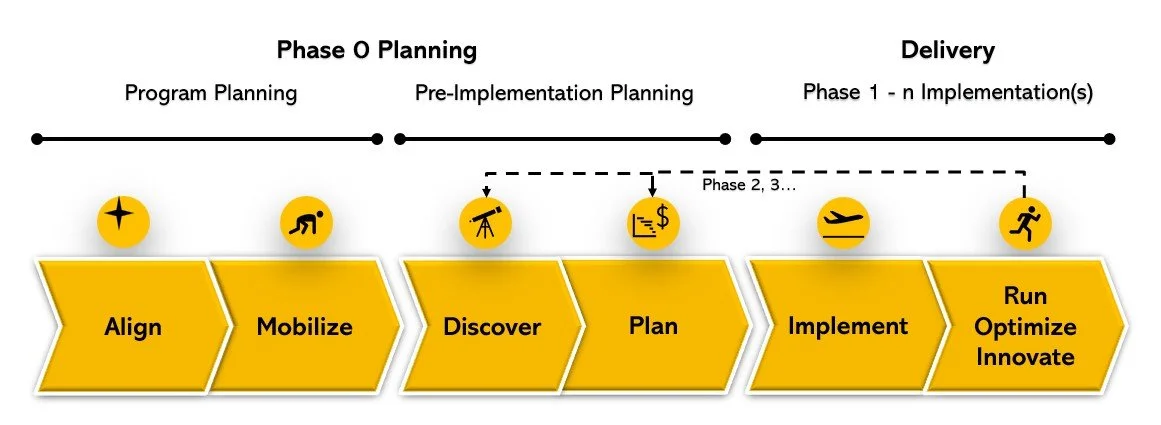
Figure 1. Phase Zero as the foundation for transformation success
Stage 1: Align on the Case for Change
Align establishes the strategic foundation of the transformation. The goal is to define the problem to solve, the case for change, the target outcomes, and the sequence of major phases. Done well, this creates a shared vision, secures sponsorship, and sets the parameters for scope, governance, and investment. Without that alignment, programs often lose focus as complexity increases.
Key activities and deliverables
Executive visioning workshop to align leaders on the North Star vision, target outcomes, a small set of measurable OKRs and the overall problem statement.
Transformation readiness to determine how the organization is situated for success across strategy, people, process and technology perspectives.
Technology inventory to map the current application landscape across HR domains/products, clarify purpose and usage, and quantify duplication, cost, and technical debt.
Business case and value realization plan to articulate strategic and financial value, estimate costs, and define how benefits will be tracked after go-live. Estimates should be refined further during later planning stages.
Governance model to establish decision rights, escalation paths, sponsorship, team structure, reporting and clear accountability across the program.
Delivery model to define how the transformation will be delivered, including any adjustments to the digital operating model and the balance of waterfall, hybrid, or agile methods and the implications for a SaaS environment.
Program charter and roadmap to document the vision, objectives, phased roadmap, governance, key risks, assumptions, and constraints that will guide execution.
Stage 2: Mobilize for Pre-Implementation
Once the charter and roadmap are approved, the focus shifts to mobilization: standing up the PMO, onboarding the core team, and launching the program. Success depends on a repeatable delivery model, clear accountabilities, integrated planning, and the right talent in critical roles. Without these foundations, delivery becomes inconsistent and overly dependent on vendors.
Key activities and deliverables
PMO mobilization to align with the enterprise PMO where one exists, or establish fit-for-purpose program management capabilities where one does not.
Resource planning to confirm roles, accountabilities, headcount, and critical capability needs for the upcoming phase.
Core team onboarding to place top talent in critical roles, backfill operational capacity where needed, provide role-specific training and reduce execution risk.
Program kick-off to align stakeholders on the case for change, delivery approach, timeline, and immediate priorities.
Stage 3: Discover the Target State
Discover combines discovery and high-level solution design into a single stage. The goal is to assess the current state, define the target experience, prioritize scope, and translate business needs into future-state workflows and solution choices. This is where the team clarifies pain points, identifies priority opportunities, and shapes the experience it intends to deliver—before technology constraints begin to dictate the answer.
Design thinking methods are useful here because they help teams avoid simply digitizing legacy processes. Where needed, service blueprinting can clarify interactions across people, process, and systems, while SIPOC mapping helps define upstream and downstream data flows. Fit-gap analysis then identifies where the current landscape cannot support the target state and where platform changes, third-party tools, policy updates, or interim workarounds may be required.
Key activities and deliverables
Current-state assessment to identify pain points, constraints, and opportunities through interviews, surveys, journey maps, personas, and document review.
Target-state definition to define the future experience, operating model, and prioritized business and technical needs.
Process and service design to translate requirements into future-state workflows, service blueprints, data flows and key system interactions.
Fit-gap analysis to identify where the current landscape cannot support the target state and define response options.
Solution design summary to capture scope, core priorities and requirements, major gaps, and recommended actions.
Stage 4: Build the Implementation Plan
Stage 4: Build the Implementation Plan
By the Plan stage, the team understands the requirements, target solution, major gaps, and service implications. The final task is to build the implementation plan for the next phase. That starts with functional, technical, and organizational impact assessments and ends with a credible plan for scope, resourcing, timing, and investment.
Key activities and deliverables
Impact assessments to evaluate functional, technical, and organizational implications and ensure they are reflected in the implementation approach.
Implementation plan to define scope, approach, roadmap, resourcing, and budget for the next phase in a credible and decision-ready format.
Executive summary to synthesize the case for action, delivery requirements, timeline, costs, and expected value in a format suitable for leadership review.
Conclusion
Digital HR transformation is now a strategic imperative, but it is also complex and failure-prone when the groundwork is weak. Phase Zero helps organizations reduce that risk by aligning leaders, clarifying scope, strengthening delivery readiness, and resolving critical design issues before implementation starts.
If you need support shaping the case for change or leading Phase Zero, please contact us.
Further Reading
For more on why transformation programs struggle to deliver value, read Why Digital Transformations Fail.
For more on strengthening digital delivery capability, read How HR Can Build Digital Proficiency with the Product Operating Model.